
Category: ESG

CBAM Explained Simply: What EU Importers and Exporters Need to Do Now

CBAM Explained Simply: What EU Importers and Exporters Need to Do Now
CBAM

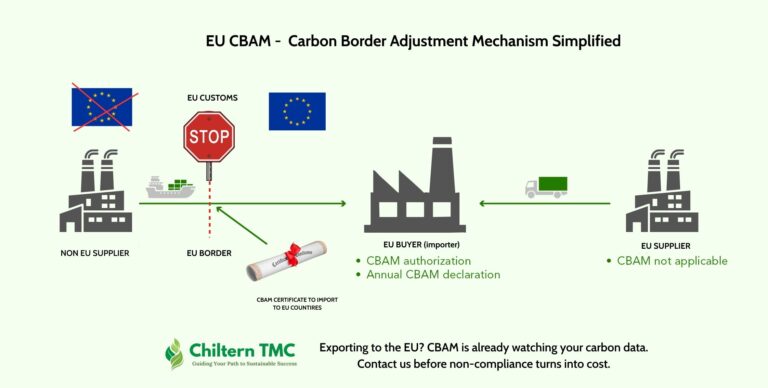
CBAM has been discussed in policy circles for years, but for many exporters it still feels distant or abstract. That perception is changing quickly. Since the start of the transitional phase, EU importers are already required to submit CBAM reports, and those reports depend heavily on data provided by non-EU suppliers.

For exporters supplying the EU, CBAM is no longer something to “watch closely.” It is something that now affects how production emissions are calculated, documented, and shared with customers.

This article explains what CBAM really requires, where companies are struggling, and what practical steps exporters should focus on right now.

Why CBAM Exists in the First Place

CBAM was introduced as part of the EU’s broader climate framework to address carbon leakage. In simple terms, the EU wants to avoid a situation where domestic manufacturers reduce emissions and absorb carbon costs, while imported products with higher emissions enter the market without similar constraints.

Instead of relying only on tariffs or trade barriers, CBAM ties market access to emissions transparency. Products entering the EU must now be accompanied by data showing how carbon-intensive their production was.

This marks a shift. Carbon data is no longer limited to sustainability reports or voluntary disclosures. It is becoming a regulatory requirement linked directly to trade.

What CBAM Actually Requires

During the current transitional phase, CBAM focuses on reporting, not payments. EU importers must submit quarterly reports detailing the greenhouse gas emissions embedded in specific imported goods.

Although the legal obligation sits with the importer, exporters play a critical role. Without reliable emissions data from manufacturers, importers are forced to rely on default values, which are often conservative and can work against both parties.

The transitional phase is effectively a test period, but the data collected now will influence how future financial obligations are calculated once CBAM moves into its definitive phase.

Which Companies Are Affected

CBAM currently applies to imports of:

  • Cement
  • Iron and steel
  • Aluminium
  • Fertilisers
  • Hydrogen
  • Electricity

If you manufacture or export products in these categories to the EU, CBAM already applies to your supply chain, even if no carbon payments are due yet.

It is also important to note that CBAM coverage is expected to expand. Companies outside the current scope are still watching closely, as similar reporting expectations may apply to additional sectors in the coming years.

Understanding Embedded Emissions Without the Jargon

One of the most confusing aspects of CBAM is the term “embedded emissions.”

In practice, embedded emissions are the greenhouse gases released during the production of a product, up to the point it is imported into the EU. Under CBAM, this mainly includes:

  • Direct emissions from manufacturing processes
  • Indirect emissions from electricity used in production

This is not a high-level estimate. It requires clear boundaries, defined methodologies, and supporting documentation. Companies that already track emissions for internal or reporting purposes often find that CBAM requires a higher level of detail and structure.

What the Transitional Phase Is Really About

The transitional phase is often described as a “learning period,” but that can be misleading. While penalties are limited at this stage, inaccurate or poorly documented data can still create problems with EU customers.

From what we are seeing across exporters, the transitional phase is where most of the groundwork must be done:

  • Establishing emissions calculation methods
  • Aligning production data with regulatory definitions
  • Creating internal processes for data collection and review

Companies that delay this work often end up reacting to importer requests under tight deadlines.

Common Challenges Exporters Are Facing

Several issues come up repeatedly when exporters begin preparing CBAM data:

  • Emissions calculations are based on estimates rather than measured data
  • Production boundaries are unclear or inconsistently defined
  • Assumptions are not documented properly
  • CBAM data does not align with corporate GHG inventories
  • Sustainability teams are disconnected from production and finance teams

These challenges are not unusual. CBAM sits at the intersection of sustainability, operations, and compliance, which means it requires coordination across functions that do not always work closely together.

How CBAM Connects to ISO 14064 and Verification

Exporters with ISO 14064–aligned greenhouse gas inventories generally find CBAM easier to manage. The reason is straightforward. ISO-aligned systems already require defined boundaries, consistent methodologies, and traceable records.

While CBAM reporting itself is not the same as ISO verification, the underlying discipline is similar. Independent verification can also help strengthen confidence in the data being shared with EU importers, particularly as scrutiny increases over time.

For companies supplying large EU customers, credible and well-documented emissions data is becoming a commercial expectation, not just a regulatory one.

Practical Steps to Focus on Now

Rather than treating CBAM as a reporting task, exporters should approach it as a data governance exercise.

In practical terms, this means:

  • Confirming whether products fall under CBAM scope
  • Reviewing how emissions are currently calculated and documented
  • Identifying data gaps early, especially around electricity use
  • Aligning CBAM data with existing GHG inventories
  • Preparing for future verification requirements

    These steps are far easier to manage when taken proactively, rather than in response to last-minute requests from importers.

CBAM as a Signal, Not Just a Regulation

CBAM is often discussed as a standalone regulation, but it signals a broader trend. Carbon transparency is becoming embedded in trade rules, procurement decisions, and supplier evaluations.

For exporters, this changes the role of sustainability data. It is no longer just about reporting performance. It directly affects market access, competitiveness, and long-term relationships with EU customers.

Companies that invest time now in getting their emissions data right will be better positioned not only for CBAM, but for the wider set of climate-related trade measures that are likely to follow.

Written by Ahamed Aasir, Sustainability Marketing Consultant for Chiltern TMC Consultant.
Last Updated: Jan 07, 2025

Read More

ESG Consulting: Why Businesses Need It and How It Drives Long-Term Success

ESG Consulting: Why Businesses Need It and How It Drives Long-Term Success

ESG Consulting is no longer just a trend—it’s a fundamental shift in how businesses operate. Whether you’re a small enterprise or a multinational corporation, integrating Environmental, Social, and Governance (ESG) principles into your business strategy isn’t just about doing good; it’s about staying competitive, attracting investors, and mitigating risks.

But let’s be honest—keeping up with ESG regulations, reporting standards, and investor expectations can be overwhelming. That’s where ESG consulting comes in. ESG consultants help businesses navigate the complexities of sustainability, ensuring compliance while unlocking new growth opportunities.

In this guide, we’ll dive deep into what ESG consulting is, why it matters, and how it can transform your business. Whether you’re just starting or looking to refine your ESG strategy, this guide will give you the insights you need to make informed decisions.

What is ESG Consulting?

At its core, ESG consulting helps businesses integrate sustainable practices into their operations. It involves assessing environmental impact, corporate governance, and social responsibility to align with regulations and stakeholder expectations.

What is ESG Consulting Do?

✔ïļ Evaluate sustainability risks and opportunities
✔ïļ Develop ESG frameworks and policies
✔ïļ Ensure compliance with local and global regulations
✔ïļ Improve ESG ratings for investor confidence
✔ïļ Guide businesses on responsible corporate governance

In short, ESG consultants don’t just help companies stay compliant—they help them turn sustainability into a competitive advantage.

Why ESG Consulting Matters More Than Ever

ESG isn’t just about ethics; it’s about business survival. Here’s why companies are investing in ESG consulting now more than ever:

  • Regulatory Pressure is Increasing → Governments worldwide are enforcing stricter sustainability laws. Non-compliance can lead to hefty fines and legal issues.
  • Investors Demand ESG Transparency → ESG performance now influences funding decisions. Companies with strong ESG scores attract more investors.
  • Consumers Prefer Sustainable Brands → Customers are more conscious about where they spend their money. A strong ESG strategy builds brand trust.

      Risk Management & Future-Proofing → ESG consulting helps businesses identify and mitigate long-term risks, from climate change to supply chain vulnerabilities.

Benefits of ESG Consulting Services

1. Stronger Brand Reputation

Sustainability isn’t just a nice-to-have—it’s a business necessity. Companies with solid ESG practices earn customer trust, attract better partnerships, and stand out in the market.

2. Improved Financial Performance

Many businesses assume that sustainability initiatives are costly. However, studies show that companies with strong ESG strategies often outperform their competitors financially due to operational efficiency and reduced risks.

3. Compliance with Global Regulations

Laws like the EU CSRD, SEC Climate Disclosure Rules, and GRI Standards are becoming more stringent. ESG consultants help businesses stay ahead of these evolving regulations, avoiding penalties and reputational damage.

4. Attracting Investors and Business Partnerships

Private equity firms, venture capitalists, and institutional investors are prioritizing ESG factors. A well-executed ESG strategy improves your chances of securing funding.

5. Employee Engagement and Talent Retention

People want to work for companies that align with their values. A strong ESG strategy improves workplace culture, employee satisfaction, and retention rates.

Benefits of ESG Consulting Services

Stronger Brand Reputation

Sustainability isn’t just a nice-to-have—it’s a business necessity. Companies with solid ESG practices earn customer trust, attract better partnerships, and stand out in the market.

2. Improved Financial Performance


Many businesses assume that sustainability initiatives are costly. However, studies show that companies with strong ESG strategies often outperform their competitors financially due to operational efficiency and reduced risks.

3. Compliance with Global Regulations

Laws like the EU CSRD, SEC Climate Disclosure Rules, and GRI Standards are becoming more stringent. ESG consultants help businesses stay ahead of these evolving regulations, avoiding penalties and reputational damage.

4. Attracting Investors and Business Partnerships

Private equity firms, venture capitalists, and institutional investors are prioritizing ESG factors. A well-executed ESG strategy improves your chances of securing funding.

5. Employee Engagement and Talent Retention

People want to work for companies that align with their values. A strong ESG strategy improves workplace culture, employee satisfaction, and retention rates.


How ESG Consultants Help Businesses Stay Compliant

Regulations surrounding ESG are evolving rapidly, and keeping up can be challenging. ESG consultants play a crucial role in ensuring compliance with frameworks such as:

    • Global Reporting Initiative (GRI) – Standardized ESG reporting framework

    • Sustainability Accounting Standards Board (SASB) – Industry-specific ESG disclosures

    • Task Force on Climate-related Financial Disclosures (TCFD) – Climate risk reporting

    • EU Corporate Sustainability Reporting Directive (CSRD) – Mandatory ESG disclosures for European businesses

    • United Nations Sustainable Development Goals (SDGs) – Global sustainability targets for businesses


Steps ESG Consultants Take to Ensure Compliance:

✔ Conducting ESG risk assessments
✔ Aligning corporate strategies with international sustainability goals
✔ Developing ESG training programs for employees and leadership teams
✔ Advising on carbon reduction and responsible supply chain management


Key ESG Challenges & How Consultants Address Them

Despite its benefits, implementing ESG initiatives comes with challenges. Here’s how ESG consulting helps businesses overcome these obstacles:

Challenge 1: Unclear ESG Regulations & Reporting Standards

    • Solution: ESG consultants provide clarity on different frameworks (GRI, SASB, TCFD) and tailor strategies to meet regulatory requirements.


Challenge 2: Measuring ESG Impact & ROI

    • Solution: Consultants develop key performance indicators (KPIs) and reporting tools to measure and communicate ESG progress effectively.

Challenge 3: Resistance to Change Within Organizations

    • Solution: ESG consultants conduct awareness programs and training sessions to ensure leadership and employees embrace sustainability goals.

Challenge 4: Greenwashing Accusations

    • Solution: Consultants ensure companies back up their ESG claims with real data, preventing reputational damage from misleading sustainability claims.

How to Choose the Right ESG Consulting Firm
Not all ESG consultants are created equal. Here’s what to consider when selecting an ESG consulting partner:


✔ Industry Expertise – Do they have experience in your sector (e.g., finance, manufacturing, tech)?
✔ Regulatory Knowledge – Do they understand global ESG compliance laws?
✔ Proven Track Record – Can they provide case studies and success stories?
✔ Custom Solutions – Do they offer tailored ESG strategies rather than one-size-fits-all approaches?
✔ Technology & Data Analytics Capabilities – Can they implement digital tools for ESG tracking and reporting?


ESG Trends in 2025 & Beyond
The ESG landscape is rapidly evolving. Here are some trends shaping the future of ESG consulting:


🌍 Mandatory ESG Reporting Will Become Standard → More governments will enforce stricter disclosure laws.
📊 AI & Big Data in ESG → Companies will use advanced analytics to track and report ESG performance.
🔄 Circular Economy Initiatives → Businesses will focus on reducing waste and improving resource efficiency.
ðŸ’Ą Climate Risk Management → Companies will prioritize resilience planning for climate-related risks.

ESG consulting will play a crucial role in helping businesses adapt to these trends and stay competitive in a sustainability-driven world.Future-Proof Your Business with ESG Consulting


Sustainability isn’t just a corporate responsibility—it’s a strategic advantage. Businesses that integrate ESG principles into their operations not only meet compliance requirements but also unlock new growth opportunities, attract investors, and build lasting brand value.

However, ESG isn’t a one-size-fits-all approach. Each company has unique challenges and goals, which is why ESG consulting is essential. A good ESG consultant helps businesses navigate the complexities of regulations, develop data-driven strategies, and ensure long-term success.

If your business hasn’t yet invested in ESG consulting, now is the time to start. Because in today’s business world, those who embrace sustainability don’t just survive—they thrive.

Written by Ahamed Aasir, Sustainability Marketing Consultant for Chiltern TMC Consultant.
Last Updated: Aug 11, 2025
Read More

ESG Reporting Software vs. Manual Reporting – Which One is Better?

ESG Reporting Software vs. Manual Reporting – Which One is Better?

Sustainability and corporate responsibility are no longer optional. Companies must comply with Environmental, Social, and Governance (ESG) standards to build trust, attract investors, and meet regulatory requirements. However, one major challenge remains: how to efficiently track, analyze, and report ESG data.

Traditionally, businesses have relied on manual ESG reporting methods, but with the advent of ESG reporting software, companies now have a powerful alternative. The question is: which one is better? In this blog, we will compare ESG reporting software with manual reporting to help you make an informed decision.

Understanding ESG Reporting

ESG reporting is the process of disclosing an organization’s impact on environmental, social, and governance factors. This includes carbon emissions, energy usage, labor policies, diversity, ethical governance, and more. Accurate ESG reporting is essential for regulatory compliance, stakeholder transparency, and sustainable business growth.

What is Manual ESG Reporting?

Manual ESG reporting involves collecting and processing ESG data using spreadsheets, documents, and emails. Companies manually enter data, analyze it, and generate reports based on internal policies or external regulatory requirements.

Pros of Manual ESG Reporting:

  • Lower upfront costs – No need to purchase specialized software.
  • Flexible and customizable – Data entry can be tailored to specific company needs.
  • No dependency on software learning curves – Employees can use familiar tools like Excel and Word.

Cons of Manual ESG Reporting:

  • Time-consuming – Requires manual data entry, validation, and calculations.
  • Error-prone – High risk of data inconsistencies and human errors.
  • Limited scalability – Difficult to manage for large enterprises with complex ESG frameworks.
  • Lack of real-time insights – No automated tracking or live dashboards for monitoring ESG performance.

What is ESG Reporting Software?

ESG reporting software is an automated solution that helps businesses collect, analyze, and generate ESG reports efficiently. These tools integrate with data sources, automate calculations, and provide real-time insights into ESG performance.

Pros of ESG Reporting Software:

  • Automated data collection – Reduces manual work and improves efficiency.
  • Enhanced accuracy – Eliminates errors caused by manual data entry.
  • Scalability – Suitable for businesses of all sizes, from startups to enterprises.
  • Real-time insights – Provides dashboards and analytics to track ESG metrics.
  • Regulatory compliance – Helps businesses stay aligned with global ESG reporting standards such as GRI, SASB, and TCFD.

Cons of ESG Reporting Software:

  • Initial investment – Requires an upfront cost for software and implementation.
  • Learning curve – Employees need training to use the platform effectively.
  • Software compatibility – May require integration with existing business systems.

Key Differences: ESG Software vs. Manual Reporting


Feature

ESG Reporting Software

Manual ESG Reporting

Data Accuracy

High (automated error-checking)

Low (prone to human errors)

Time Efficiency

Fast (automated processes)

Slow (manual data collection)

Scalability

High (suitable for large enterprises)

Low (challenging for complex reporting)

Compliance

Easily aligned with global standards

Requires manual effort to ensure compliance

Real-Time Monitoring

Yes

No

Cost

Higher upfront cost but cost-effective long term

Lower initial cost but expensive in terms of time and errors

Which One Should You Choose?

The choice between ESG reporting software and manual reporting depends on your company’s needs:

  • If you run a small business with minimal ESG data, manual reporting may be sufficient for now.
  • If you are a large organization with complex ESG requirements, ESG reporting software is the best option for efficiency, accuracy, and compliance.
  • If your company is aiming for sustainability leadership, ESG software helps provide real-time insights and better decision-making.

Final Verdict

While manual ESG reporting may seem cost-effective initially, it becomes inefficient and error-prone as ESG data complexity increases. ESG reporting software offers automation, accuracy, and compliance benefits that make it the preferred choice for modern businesses.

For organizations looking to enhance their ESG reporting capabilities, investing in ESG software is a strategic move that ensures sustainability, compliance, and data-driven decision-making.

Ready to Simplify ESG Reporting?

Explore leading ESG reporting software solutions today and transform how you manage sustainability data. The future of ESG reporting is digital, and now is the time to make the switch!

ESG REPORTIng software
Read More

The Importance of ESG Due Diligence in Corporate Decision-Making

The Importance of ESG Due Diligence in Corporate Decision-Making – ESG Reporting

Read More